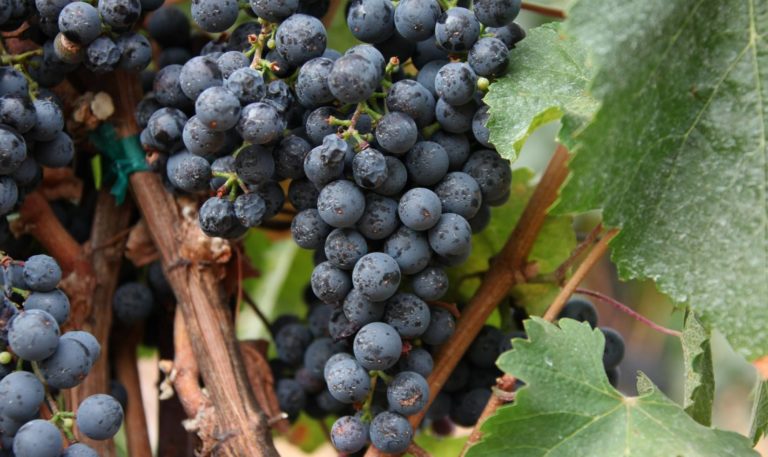


Ever wondered how grapevines are grafted and what the process entails? In May, we embarked on our first grapevine field grafting project since completion of the Jordan Estate soil mapping study. Grafting allows us to change the grape variety of the plant without planting a new grapevine, as demonstrated in this video. Using results from the study, we identified certain vineyard blocks, which had soil composition more suitable to Petit Verdot and Malbec than other Bordeaux grape varieties. Technology is a beautiful thing.
Approximately 3.2 acres of Cabernet Sauvignon were earmarked for grafting to Malbec, and roughly 3.3 acres of Merlot were grafted to Petit Verdot. These blocks were selected for the experiment because they’ve struggled to produce the quality of fruit Winemaker Rob Davis demands for our final blend. The soil mapping study has allowed us to identify these small pieces of vineyard with soil variability (rocky, more restrictive composition), and try other Bordeaux varietals that should have higher potential for greatness. Petit Verdot has proven to be an ideal grape for blending with Cabernet Sauvignon, and the scientific data now available on our estate vineyards indicates that our success with Petit could be extended to other blocks. Five years ago, we grafted our last Cabernet Franc vineyard block to Petit Verdot, which now produces some of the highest-quality grapes on our estate.
This video covers the viticulture technique of field grafting grapevines, which allows a mature vineyard to produce quality grapes in far less time than replanting–and has significantly less environmental impact. Watch how these master craftsmen graft each vine, completely changing its flavor with a few cuts and incisions. In just two years, these vines will be bearing an entirely different variety of grapes than they did just last harvest.
Author Bio
Meet Brent
Chief farmer, rancher and pollinator whisperer. Tending to the Jordan grapevines, cows, chickens, bees, trees and wild animals since 2009.
Follow Us


Popular Posts