From the Cellar

Chardonnay batonnage demonstration barrel: winemaking in action

by on November 22, 2011

YouTube Preview Image 

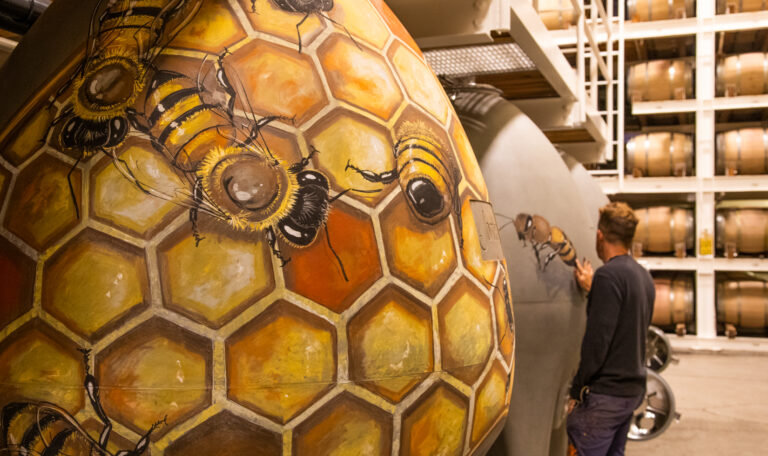
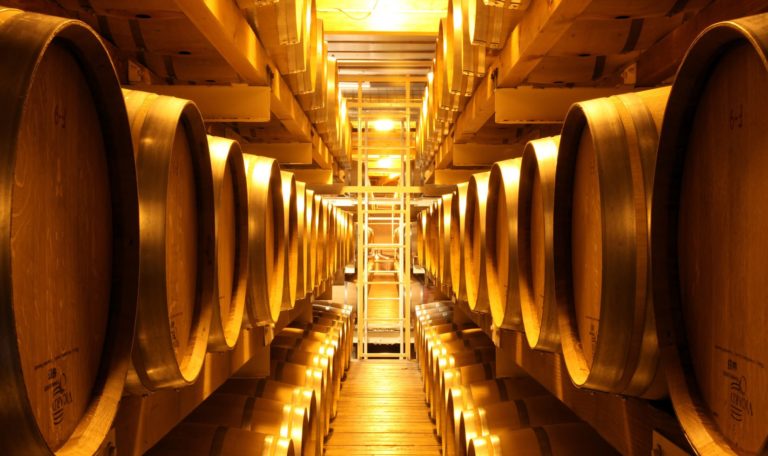
Have you ever wanted to see what happens inside a wine barrel? You’re not alone. Last summer, our Guest Services staff asked us if it would be possible to create a special see-through barrel, so trade tour and tasting guests could get an inside look at the old-world winemaking art of batonnage. I worked with one of our local cooperages to create Jordan’s first demonstration barrel, available for viewing during our 3 p.m. private trade tours from October through April, when our youngest vintage of Chardonnay is aging in barrel.

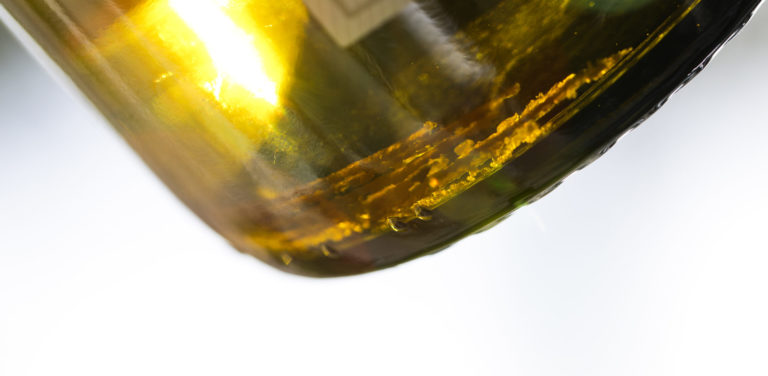
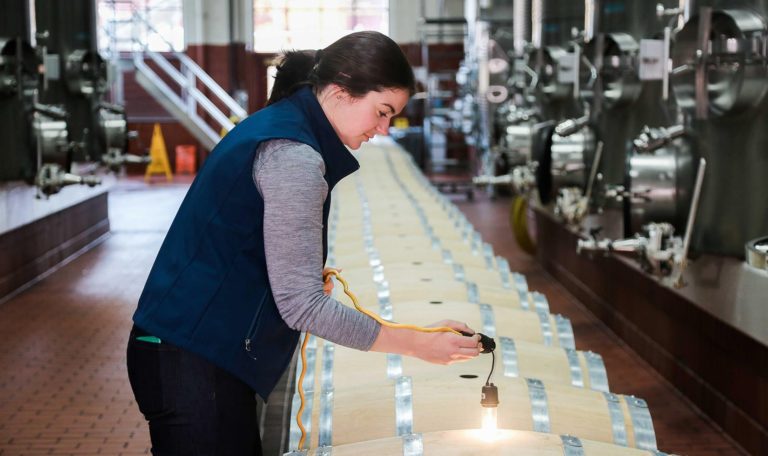
Batonnage, or stirring of the lees, is practiced for every vintage of Jordan Chardonnay. By hand-stirring the lees, we release compounds from the dying yeast cells into the wine, which contribute to a creamy, smoother mouthfeel. These compounds help to integrate the oak flavors into the wine and soften the oak tannins.

One of our most popular video blog posts of 2011 describes batonnage in detail.

The life of a true cork dork: cork harvesting, making, quality testing

by on June 2, 2011

YouTube Preview Image

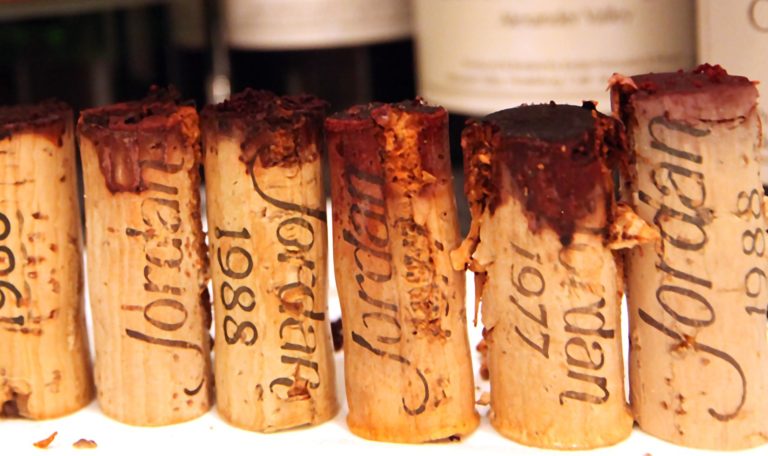
I guess you could say all winemakers are “cork dorks,” but since my job also entails overseeing the bottling of our wines every June, I must confess that I’m also a dork about the corks that go into Jordan wine. (Or as Rob likes to call me, The Cork Czar.)

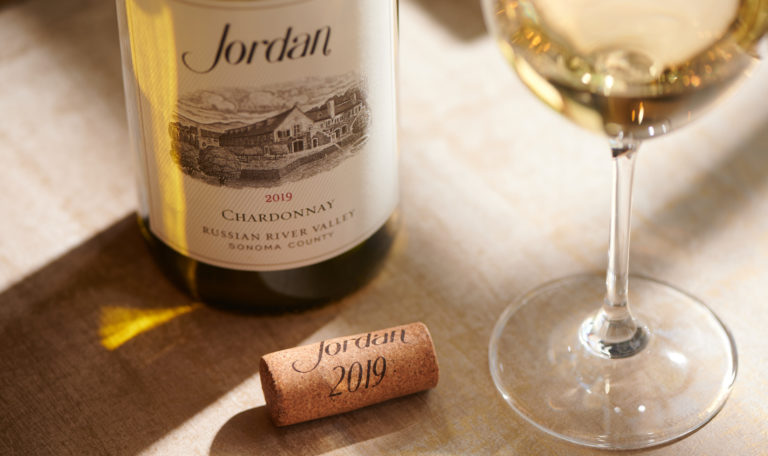
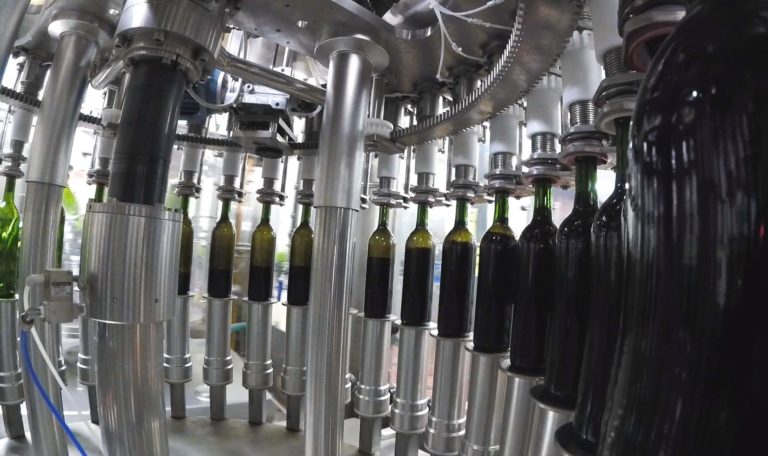
Our first bottles of 2009 Jordan Cabernet Sauvignon were sealed with 100-percent natural corks today, and before a single bottle is filled with our latest vintage, we dedicate nearly six weeks to preparing our newborn wine–and our corks–for this moment. We’re very meticulous about the quality control of corks, using only the top grade of corks made in Portugal and employing rigorous quality control measures before every cork finds its new home in a bottle of Jordan Chardonnay or Cabernet Sauvignon. 
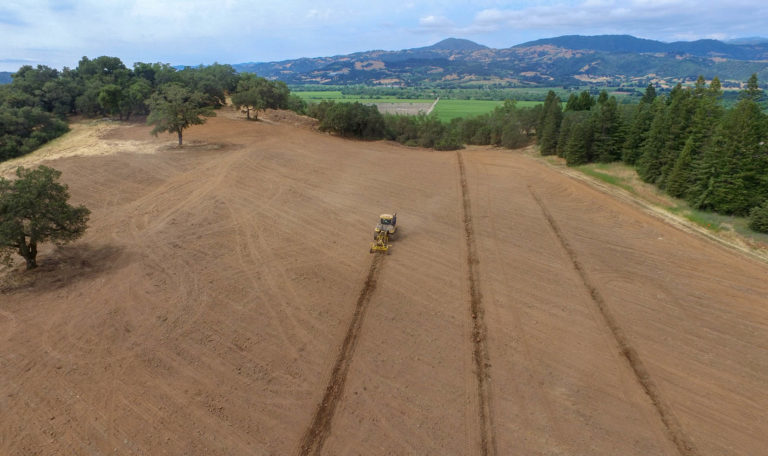
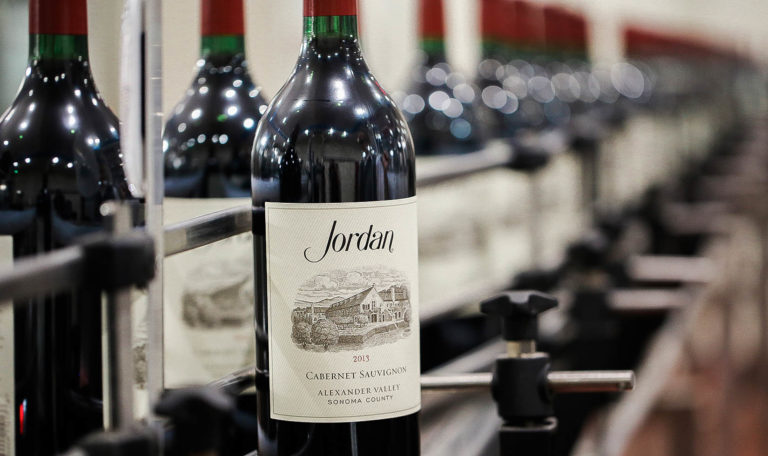
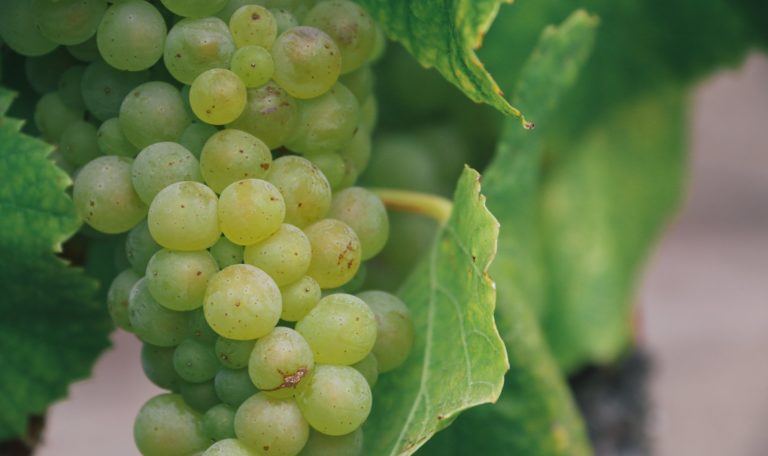
Before studying winemaking in college, I had no idea cork trees lived up to 250 years–and trees were not harvested for wine corks until they reached 40 years of age. Once you’ve watched a worker harvest bark from a cork tree, you’ll have a newfound respect for their industry.

We take every precaution and quality measure available to combat the possibility of a cork taint affecting a bottle of our wine.  A flawed wine, which has a muted or musty nose and flavors, will often be called “corked” even when the cork is not the culprit of the taint. Cork taint can also come from wine barrels, for example. Cork taint is one of those non-harmful, yet frustrating things that happens when you are dealing with natural, agricultural products. Both wine and corks come from living, breathing plants. Alas, we still want every bottle of Jordan to taste exactly how we intended.

In this video, I discuss how cork is sustainably harvested from forests without cutting down the trees. It’s truly a remarkable, renewable process in our increasingly carbon-footprint conscious world. How wine corks are made is also highlighted, as well as the many quality control steps that go into ensuring Jordan wines are closed with the best corks in the world. The cork harvest and production video footage was provided to us courtesy of 100PercentCork.org. But I’m sure Lisa would jump at the chance to come to Portugal with me next time to capture scenes from a cork harvest.

New release videos: 2007 Jordan Cabernet and 2009 Chardonnay

by on April 28, 2011

YouTube Preview Image
2007 Jordan Cabernet Sauvignon Alexander Valley releases officially on May 1.
YouTube Preview Image
2009 Jordan Chardonnay Russian River Valley releases officially on May 1.


In my 35 years as winemaker at Jordan Vineyard & Winery, I cannot recall a more exciting time to be working with these wines. We are truly entering a winemaking Renaissance, thanks to John Jordan’s desire to push the boundaries of wine quality and our deep understanding of local soils and vineyards forged over three decades. The finest grands crus of the world recognized centuries ago the importance of soil type, not just husbandry, in making a wine of true greatness. We are simply following the lead of our peers.

Last year’s wine releases signified our first step to elevate and enhance fruit concentration and complexity since John Jordan took the reins in 2005. An anticipated sequel to the 2006 Cabernet Sauvignon and 2008 Chardonnay, our latest vintages officially release May 1, 2011. And it is one of those rare occasions where the sequel will likely outshine its revered predecessor. 

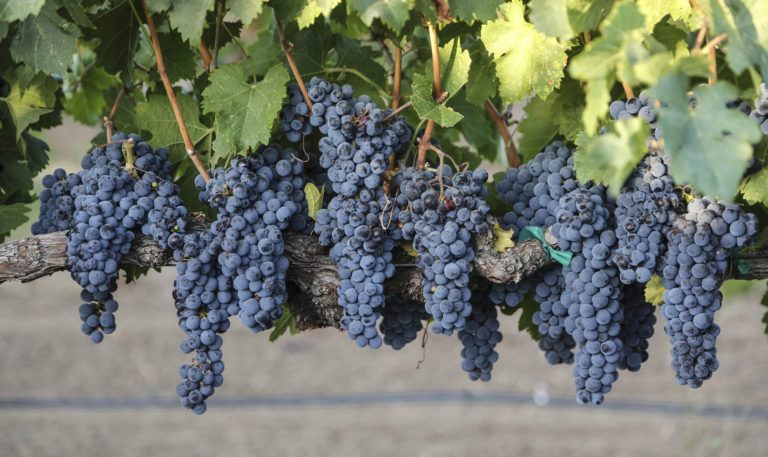
Our 2007 Cabernet Sauvignon combines an exceptional vintage with our commitment to enhanced fruit sourcing and extended bottle age. The 2007 growing season made this vintage a winemaker’s dream. A smaller crop yielded more concentrated blackberry and cassis flavors in the grapes, and moderate temperatures allowed the fruit to mature slowly and beautifully. Combining our finest estate blocks with coveted grower vineyard parcels, our 2007 vintage is truly a compilation of the great single vineyards of the region blended into one bottle. This seamless, silky wine is reminiscent in style to Saint-Julien, making it my proudest Cabernet Sauvignon release to date.

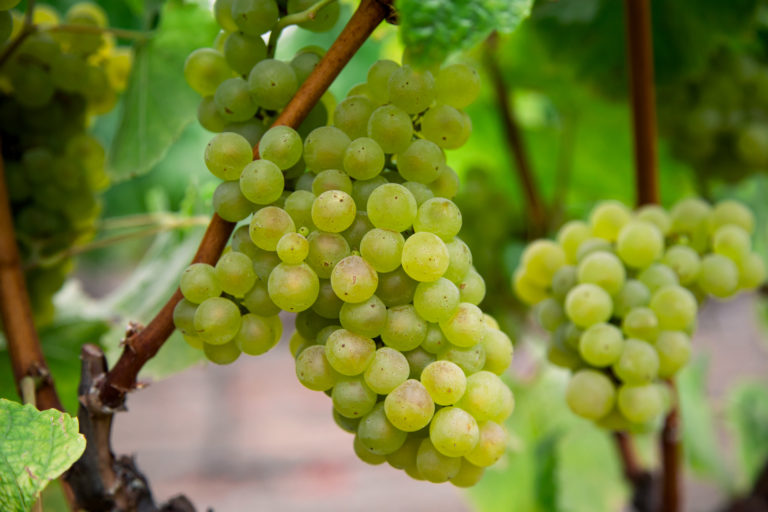
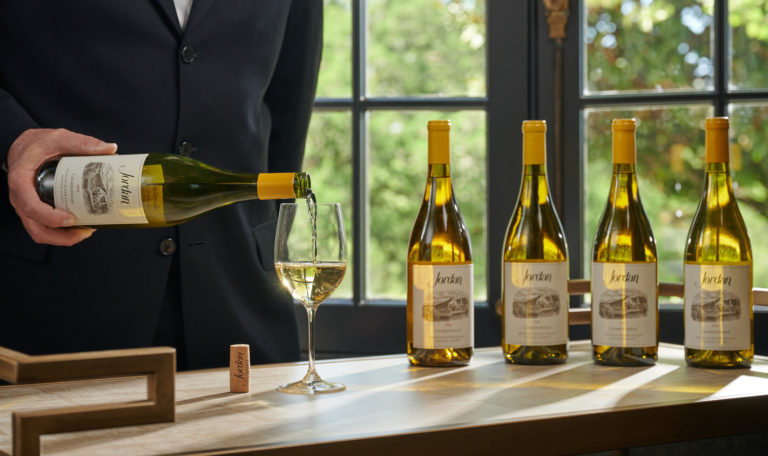
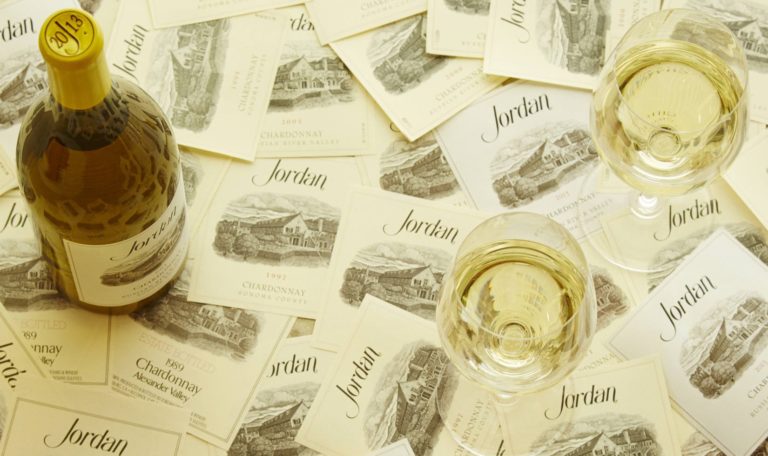
Our 2009 Chardonnay continues our progression to highlight the bright fruit flavors and crisp acidity found in the finest Russian River Valley grapes. A wine defined by elegance and finesse, the 2009 Chardonnay compares favorably to my other favorite Chardonnay, a well-crafted Puligny-Montrachet. Less malolactic fermentation has allowed the fragrant fruit in our 2009 vintage to take center stage.

We’re considering hosting a live webcast tasting of these wines next month. Please let us know if you’re interested in receiving more information.

Video: demonstrating the old-world art of making a wine barrel

by on April 15, 2011

YouTube Preview Image

Every winter, new French and American oak barrels are crafted and delivered to the winery for aging our youngest vintage of Cabernet Sauvignon. I always take the opportunity to visit Nadalié cooperage in Calistoga, one of our barrel makers, to monitor the making of our American oak barrels in action. (Nadalié also makes our French oak barrels in France.) We like to work with coopers, such as Nadalié, that preserve many hands-on, old-world techniques when making oak barrels. 

As I mentioned in last winter’s new barrel inspection video, the smell of a new barrel is like catnip for a cellarmaster. Getting to smell a new oak barrel toasting over an open fire is one of the more enjoyable parts of my job. We use a combination of used and new French oak barrels in our winemaking because we don’t want the new oak flavors to overpower the fruit flavors in the wine, so new barrels account for only one-third of the oak vessels in the Jordan cellar. But I always look forward to inspecting every one of them.

French oak barrels for aging our Chardonnay arrive in August, so the barrel making and inspecting process will start again very soon. 

Selecting oak barrels for Cabernet Sauvignon: no recipes, no bias

by on March 17, 2011

YouTube Preview Image

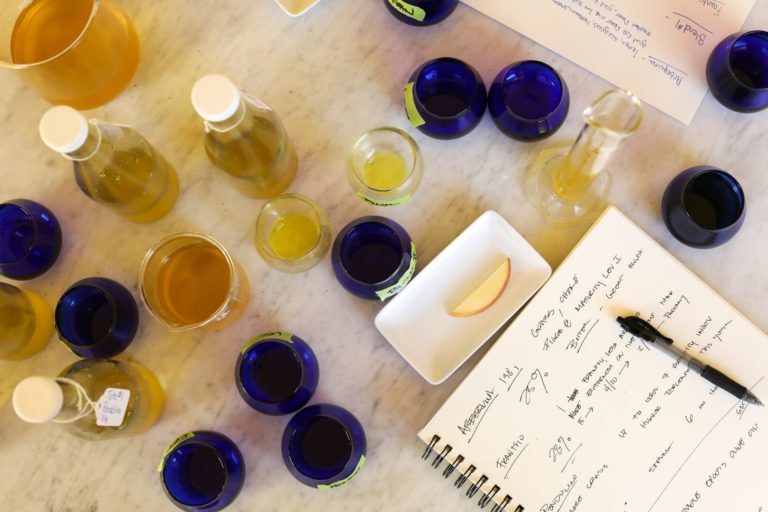
Every fall, we begin the meticulous process of selecting oak barrels for our youngest vintage of Cabernet Sauvignon. Unlike many wineries, we don’t follow a recipe for which types of barrels we purchase each year. Barrel selection decisions–from country of origin (French or American) and forest source, to cooperage, toast level and even age of barrel–are based entirely on taste.

We start first with tasting tank samples of newborn wines during fermentation. This gives us initial impressions of the wine’s fruit, as well as tannin, profile. But we also must ensure that the types of barrels we love for aging our Cabernet are still meeting our standards. That’s where blind tastings play a critical role. Blind tasting two vintages of Jordan Cabernet allows us to evaluate our coopers without bias. Our blind tasting rankings are evaluated against our perceptions on the 2010 tank samples to determine the final barrel order. Cooperages are surprised that we reassess the quality of their product every year. We think it keeps them on their toes.

Choosing barrels for the 2010 vintage was a blast. The sensational fruit intensity and tannic backbone of this vintage led us to use a larger percentage of French oak. French oak actually mollifies the sterner character of our Cabernet, providing a round, soft, complex finish. As soon as Rob tasted the first tank sample of 2010 Cabernet, he said, “I can’t wait to put this in a bottle.” Me too. Now we just have to wait two years. 


Batonnage: an old-world winemaking technique preserved each winter

by on February 23, 2011

YouTube Preview Image

Each winter, our barrel cellar is filled with the sound of batons stirring our Chardonnay. The old-world winemaking technique of batonnage, or stirring of the lees, is practiced for every vintage of Jordan Chardonnay. It’s a beautiful cadence that is truly music to a winemaker’s ears.

Batonnage is a wonderful tool for winemakers, almost like a spice rack to a chef. The incorporation of the stirring–the length of time on the lees, as well as frequency of stirring–varies every year.  It is one of many methods that we use to provide balance to our wines. Batonnage helps gives our Chardonnay it’s silky mid-palate. By keeping the yeast cells in contact with the Chardonnay while it ages in French oak barrels–and stirring those lees–we can give the mouthfeel of our Chardonnay a hint of creaminess we desire. But it’s a delicate balancing act: you don’t want to stir too much or the wine will lose its bright fruit flavors, and that’s the most important attribute in our wine.

Every barrel of Jordan Chardonnay has been stirred by hand since the inaugural 1979. With the 2010 vintage batonnage now complete, I’ve enjoyed nearly 32 years of chamber “music” in our barrel room.

Tallowing: preserving an old-world winemaking technique

by on January 19, 2011

YouTube Preview Image 

Our cellar team still practices an old-world winemaking technique that has nearly been lost in modern America’s wine culture: tallowing.  Each winter, the barrel blend of our latest vintage of Cabernet Sauvignon is placed in 6,000-gallon oak casks so the flavors of Cabernet Sauvignon and Merlot can marry, and these vintage doors need to be properly sealed to hold the wine.

The tallow we make to seal the doors on our circa-1976 oak casks is today made of a special wax mixture versus the animal fat of a bygone era–and our techniques for shaping the tallow have evolved slightly over the last 35 years as well.  Shaping tallow is a lot like making gnocchi, so we now roll out the wax on one of our chef’s cutting boards.

Our 2010 Cabernet will remain in cask for a few months before moving to a combination of used and new French and American oak barrels for an additional 12 months of aging.

When to drink videos: Jordan Cabernet Sauvignon wine tasting evolution (vintages 1999, 2000, 2001, 2002, 2003, 2004)

by on January 7, 2011

Wondering when to drink that special bottle of Jordan Cabernet Sauvignon in your cellar? Winemaker Rob Davis provides his latest tasting notes, as well as cellaring potential, food pairing suggestions and serving recommendations for vintages 1999, 2000, 2001, 2002, 2003 and 2004. Videos for 2005 and 2006 Jordan Cabernet Sauvignon can also be found on our YouTube From the Cellar series and iTunes podcast. Have any vintages from the 1970s and 1980s in your cellar you’d like to learn more about? We welcome your comments here or on Facebook.

1999 Jordan Cabernet Sauvignon

YouTube Preview Image

2000 Jordan Cabernet Sauvignon

YouTube Preview Image

2001 Jordan Cabernet Sauvignon

YouTube Preview Image

2002 Jordan Cabernet Sauvignon

YouTube Preview Image

2003 Jordan Cabernet Sauvignon

YouTube Preview Image

2004 Jordan Cabernet Sauvignon

YouTube Preview Image